Tampilkan postingan dengan label Isaac Hayes. Tampilkan semua postingan

Isaac Hayes - Hot Buttered Soul (Rare Soul US 1969)

Minggu, 28 Oktober 2012 0 komentar


Size: 94.2 MB
Bitrate: 256
mp3
Ripped by: ChrisGoesRock
Artwork Included
Source: Japan 24-Bit Remaster

Hot Buttered Soul was Isaac Hayes' second studio album. Released in 1969, it is recognized as a landmark in soul music.

The album almost never came to be. Hayes' solo debut, Presenting Isaac Hayes, had been a poor seller for Stax Records, and Hayes was about to return to his behind-the-scenes role as a producer and songwriter at the venerable soul label when it suddenly lost its complete back catalog after splitting with Atlantic Records in May 1968. Stax executive Al Bell decided to release a new, almost instant, back catalog of 27 albums and 30 singles at once, ordered all of Stax's artists to record new material, and encouraged some of Stax's prominent creative staff, including Hayes and Steve Cropper, to record solo albums.

Burned by the retail flop of Presenting Isaac Hayes, Hayes told Bell that he would not cut a follow-up unless he was granted complete creative control. Since Bell had encouraged Hayes to record Presenting... in the first place, he readily agreed.

The album begins with a cover of the Burt Bacharach and Hal David classic, "Walk On By". Second was "Hyperbolic syllabicsesquedalymistic", an uptempo funk song with wah-wah guitar and rolling pianos. "One Woman", at just over five minutes the shortest track on the album, focuses on the pangs of infidelity. An extended reinterpretation of Jimmy Webb's country music composition "By the Time I Get to Phoenix" closes the album. After an eight-minute spoken introduction, the song slowly builds to a climax of horns, strings, organs and vocals. (On most commonly heard versions of this song, there is an edit before the lyric "when he reached the age of maturity.." during the spoken intro – early vinyl pressings of the album do not feature this edit, and reveal a brief section that includes a technical error, where the sustained organ note briefly drops out.)

The album was notable for its use of innovative Bell/Hayes production and Terry Manning engineering techniques, and has deeply influenced a great deal of subsequent soul, hip hop and Motown music. Both "Walk on By" and "Hyperbolic syllabicsesquedalymistic" have been sampled extensively, the former showing up on tracks by the likes of Compton's Most Wanted, 3rd Bass, MF DOOM, Wu-Tang Clan, Hooverphonic and Notorious B.I.G., while the latter song was sampled by Public Enemy for "Black Steel in the Hour of Chaos". "Hyperbolicsyllabicsesquedalymistic" also appears on the soundtrack to the film Zodiac, while "Walk On By" appears along with Hayes' version of "The Look Of Love" on the soundtrack to the film Dead Presidents.

Much of the final production was done as part of the package of products brought to Detroit by producer Don Davis to expedite the production process. The project strings and horns were recorded at United Sound Studios by engineer Ed Wolfrum with vocals and final mix at Terra-Shirma by engineer Russ Terrana. The pre-delay reverberation technique, recorded in part by Manning on the tracking session, had been used at Artie Fields productions in Detroit in late 1950s, and at Columbia Records; it was also used by Wolfrum and others for numerous productions and commercials previous and after the release of this project including the Marvin Gaye What's Going On project, with orchestration also recorded at United. Russ Terrana went on to the engineering staff of Motown Records and was responsible recording and mixing of many hits on that label.

01."Walk On By" (Burt Bacharach, Hal David) – 12:03
02."Hyperbolicsyllabicsesquedalymistic" (Isaac Hayes, Alvertis Isbell) – 9:38
03."One Woman" (Charles Chalmers, Sandra Rhodes) – 5:10
04."By the Time I Get to Phoenix" (Jimmy Webb) – 18:42

1. Link
or
2. Link
.

Reup: Isaac Hayes - The Isaac Hayes Movement (Soul Funk US 1970)

0 komentar


Size: 79.9 MB
Bitrate: 256
mp3
Artwork Included
Ripped by: ChrisGoesRock
Source: Japan SHM-CD Remaster

The Isaac Hayes Movement was the third studio album released by Isaac Hayes. Released in 1970, it was the follow-up to "Hot Buttered Soul", Hayes' landmark 1969 album. Marvell Thomas had come up with "The Isaac Hayes Movement" as a name for Hayes' backup ensemble. He modeled the name after the Jimi Hendrix Experience. Similar in structure to Hot Buttered Soul, The Isaac Hayes Movement features only four long tracks, all with meticulous, complex and heavily orchestrated arrangements. However, unlike the previous album, this time all four songs are reworked covers of others' material. This includes Jerry Butler's "I Stand Accused", which features a nearly five-minute long spoken intro that precedes the actual song, and The Beatles' "Something", which features violin soloing by John Blair. The other two songs included on the album were the Bacharach-David song, "I Just Don't Know What to Do with Myself" and Chalmers and Rhodes' "One Big Unhappy Family".

Released in March 1970,The Isaac Hayes Movement spent a total of seven weeks at #1 on Billboard's Soul Albums chart and remained in the top ten until the last week of November in that year. The album also reached #1 on the Jazz Albums chart and spent 75 weeks on the Billboard 200 chart, peaking at #8. An edited version of "I Stand Accused" was released as a single in July 1970. It reached #23 on the Soul Singles chart and #42 on the Pop chart.

Stax Records reissued The Isaac Hayes Movement in SACD format in 2004.

Although this is Isaac Hayes' third long-player, he had long been a staple of the Memphis R&B scene -- primarily within the Stax coterie -- where his multiple talents included instrumentalist, arranger, and composer of some of the most beloved soul music of the '60s. Along with his primary collaborator, David Porter, Hayes was responsible for well over 200 sides -- including the genre-defining "When Something Is Wrong With My Baby," "Soul Man," "B-A-B-Y," "Hold On, I'm Comin'," and "I Had a Dream." As a solo artist however, Hayes redefined the role of the long-player with his inimitably smooth narrative style of covering classic pop and R&B tracks, many of which would spiral well over ten minutes. 

The Isaac Hayes Movement (1970) includes four extended cuts from several seemingly disparate sources, stylistically ranging from George Harrison's "Something" to Jerry Butler's "I Stand Accused" and even Burt Bacharach and Hal David's "I Just Don't Know What to Do With Myself." These early Hayes recordings brilliantly showcase his indomitable skills as an arranger -- as he places familiar themes into fresh contexts and perspectives. 

For example, his lengthy one-sided dialogue that prefaces "I Stand Accused" is halting in its candor as Hayes depicts an aching soul who longs for his best friend's fiancée. Even the most hard-hearted can't help but have sympathy pains as he unravels his sordid emotional agony and anguish. 

Hayes' lyrical orchestration totally reinvents the structure of "Something" -- which includes several extended instrumental sections -- incorporating equally expressive contributions from John Blair (violin). Both "I Just Don't Know What to Do With Myself" and the comparatively short (at under six minutes) "One Big Unhappy Family" are more traditionally arranged ballads. Hayes again tastefully incorporates both string and horn sections to augment the languid rhythm, providing contrasting textures rather than gaudy adornment. These sides offer a difference between the proverbial "Black Moses of Soul" persona that would be responsible for the aggressive no-nonsense funk of Shaft (1971) and Truck Turner (1974). 

01."I Stand Accused" (Jerry Butler, William Butler[disambiguation needed]) – 11:39
02."One Big Unhappy Family" (Charles Chalmers, Sandra Rhodes) – 5:54
03."I Just Don't Know What to Do with Myself" (Burt Bacharach, Hal David) – 7:05
04."Something" (George Harrison) – 11:45

1. Link
or
2. Link
.

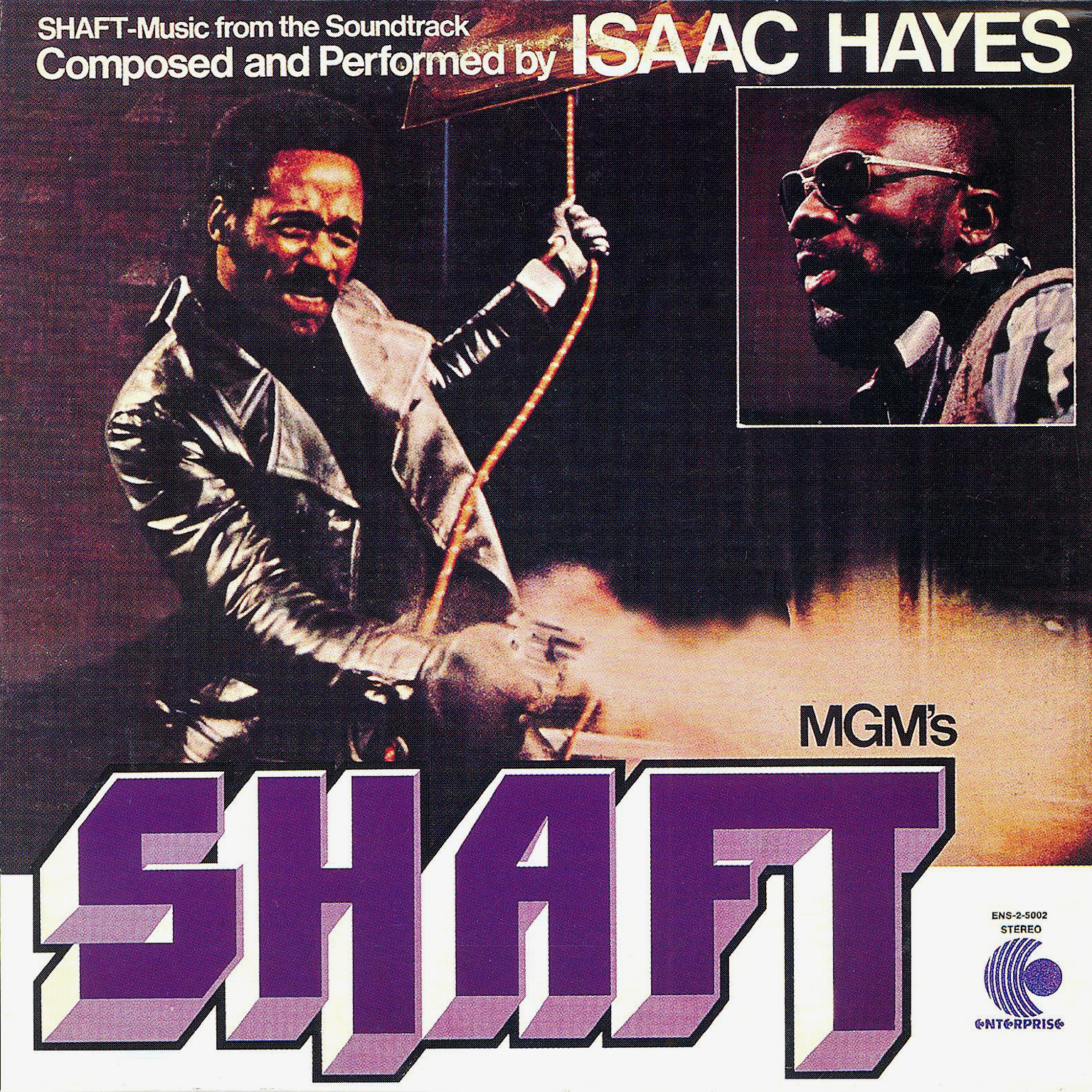
Isaac Hayes - Shaft (Great Soul Funk Album US 1971)

0 komentar


Size: 145 MB
Bitrate: 256
mp3
Ripped by: chrisGoesRock
Artwork Included
Source: japan 24-Bit remaster

Of the many wonderful blaxpoitation soundtracks to emerge during the early '70s, Shaft certainly deserves mention as not only one of the most lasting but also one of the most successful. Isaac Hayes was undoubtedly one of the era's most accomplished soul artists, having helped elevate Stax to its esteemed status; therefore, his being chosen to score such a high-profile major-studio film shouldn't seem like a surprise. And with "Theme from Shaft," he delivered an anthem just as ambitious and revered as the film itself, a song that has only grown more treasured over the years, after having been an enormously popular hit at the time of its release. 

Besides this song, though, there aren't too many more radio-targeted moments here. "Soulsville" operates effectively as the sort of downtempo ballad Hayes was most known for, just as the almost 20-minute "Do Your Thing" showcased just how impressive the Bar-Kays had become, stretching the song to unseen limits with their inventive, funky jamming. For the most part, though, this double-LP features nothing but cinematic moments of instrumentation, composed and produced by Hayes while being performed by the Bar-Kays -- some downtempo, others quite jazzy, nothing too funky, though. Even if it's not quite as enjoyable as Curtis Mayfield's Superfly due to its emphasis on instrumentals, Shaft still remains a powerful record; one of Hayes' pinnacle moments for sure. 

Shaft is a double album by Isaac Hayes, recorded for Stax Records' Enterprise label as the soundtrack LP for Metro-Goldwyn-Mayer's 1971 Soul Cinema Classic film Shaft. The album mostly consists of instrumentals composed by Hayes as score for the film. Three vocal selections are included: "Soulsville", "Do Your Thing", and "Theme from Shaft". A commercial and critical success, Shaft is Hayes' best-known work and the best-selling LP ever released on a Stax label.

Hayes initially became involved with Shaft in hopes of having director Gordon Parks cast him in the title role, but was not aware that Richard Roundtree had already been cast as John Shaft.[1] Hayes did appear in the film in a cameo role, but, more significantly, composed the film's score. While the film was still in production, Parks sent Hayes raw footage of some of the film's scenes, and Hayes wrote three pieces for the scenes: "Theme from Shaft" for the opening title sequence, "Soulsville" for a scene in which Shaft walks through Harlem, and "Ellie's Love Theme" for a love scene.

Pleased with the results, MGM hired Hayes to compose the rest of the score, and the musician spent two months working between tour dates on the score at the MGM studio. Once the score was composed and arranged, Hayes recorded the rhythm tracks with Stax band The Bar-Kays in one day. The orchestral tracks were recorded the next day, and the vocals the day after that. The songs were later re-recorded for the album at Stax Studios and slightly rearranged from their film versions: MGM's recording facility was based upon a three-track system, and Hayes wanted a richer sound for the album).

Upon its release in the summer of 1971, Shaft became the first double album of original studio material released by an R&B artist.[1] The album peaked at number one on The Billboard 200 chart, and spent sixty weeks on the chart. It took the top position on the Top R&B Albums chart for 14 weeks. Both "Theme from Shaft" and "Do Your Thing" became Top 40 singles on the Billboard Hot 100 chart, with the former peaking at number one.

At the 1972 Grammy Awards, "Theme from Shaft" won the awards for Best Engineered Recording, Non-Classical and Best Instrumental Arrangement. The film score as a whole won for Best Instrumental Composition Written Specifically For A Motion Picture or for Television. The National Association of Television and Radio Announcers gave Shaft its Album of the Year award. At the Academy Awards that year, Hayes became the first African-American to win an Oscar for a non-acting category when "Theme from Shaft" won the award for Best Original Song.

01."Theme from Shaft" (Vocal Version) – 4:39
02."Bumpy's Lament" – 1:51
03."Walk from Regio's" – 2:24
04."Ellie's Love Theme" – 3:18
05."Shaft's Cab Ride" – 1:10
06."Cafe Regio's" – 6:10
07."Early Sunday Morning" – 3:49
08."Be Yourself" – 4:30
09."A Friend's Place" – 3:24
10."Soulsville" (Vocal Version) – 3:48
11."No Name Bar" – 6:11
12."Bumpy's Blues" – 4:04
13."Shaft Strikes Again" – 3:04
14."Do Your Thing" (Vocal Version) – 19:30
15."The End Theme" – 1:56

1. Link
or
2. Link
.